Showing posts with label Lyz Lenz. Show all posts

Wednesday, August 19, 2020

The Role of Journalists: The Story of the Storm

Tree on car
Image by Mark Vitosh/Iowa Department of Natural Resources, downloaded from Iowa Public Radio “Talk of Iowa” web page: Vehicle in Linn County crushed by a broken tree from the August 10 derecho.

A friend on Facebook, whose political leanings I don’t really know, posted an anti-media rant after people in Iowa complained about the national press not paying enough attention to the huge natural disaster that befell our state last week.

NPR just reported this morning, Aug. 19, that the National Weather Service now is saying winds in Linn County were sustained at over 100 mph for over half an hour on Aug. 10, a date that will live in infamy in Iowa. The initial stories in national media about the storm covered a key topic—crop losses—which in an agricultural state are not trivial.

But the derecho drenched cities and people, too. And in the days following the storm, frustration grew that American news media were not paying attention.

The friend on Facebook? “Defund the media,” she wrote in her rant. She added a hashtag: #socialmedia.

I found the post to be almost exactly backwards. Social media has a role to play—a helpful Facebook page for local people to share questions and answers post-storm quickly sprang up—but as we should know by now, social media is the uncontrolled child mind of our collective intellect—a pouty toddler that spouts, unfiltered, whatever is on top of lazy consciousness. It’s often erratic, hurtful, and lacks any scientific or historic context.

Meanwhile, we have already defunded the media, and that’s a huge part of our national problem. Our democracy is dysfunctional and seems unequal to any crisis—whether caused by weather or a virus—due partly to the noise and fury of social media and our collective contempt for “mainstream” media. The fourth estate has become the freak out estate.

Newspapers have been cutting staffs and closing. National news outlets have not been immune to the cutback trend. For a generation, the big three broadcast networks have been gutting their news operations. Congress and the state have pulled back from public broadcasting, leaving PBS and NPR to panhandle for dollars from foundations, corporations and viewers/listeners.

There are lots of reasons why the storm and its tragic aftermath were not the Big Story in the national media that it deserved to be:

  • The news telling tribe is smaller and different. Cable TV news has always been more niche oriented and attempts to cater to ideological identities to build the loyal audience that will trust only Fox or MSNBC. We tend of think of the “news media” as an it, when it’s always been a they, and the nature of the they is shifting. “Media” is not a thing, it’s still a large, dynamic system, and the old-school, Joe Friday, just-the-facts reporters are not as easy to find.

  • The news audience is shrinking. The internet made information and disinformation available for free. Audiences for news programs and readership levels for local newspapers have plunged. The audience for “news” is still large—the internet means many stories get many eyeballs—but we’ve been trained for 25 years to think of news as a free commodity, not, as it was in the past, a service that was paid for via subscription and/or ads. The Gazette managed to get a paper out Tuesday after the storm, but fewer of us read it than would have in the past, not just because of delivery issues (all streets blocked by felled trees—ironic that dead trees kept a newspaper from being distributed) but also because readership penetration has been eroding for years. It’s long been true in America that we are suspicious of the media for manipulating the audience, and we ignore the reality that the opposite is even more true. The audience builds the media. It’s even more so in this internet era, but always was a key fact: What gets paid attention to in the media environment flourishes; what gets ignored withers. If we pay attention to “The Epoch Times” or other such media outlets, we the audience are building a nonsense media system to replace news media.

  • The derecho story doesn’t fit media paradigms. A hurricane doesn’t sneak up on anybody, and there is an information infrastructure built around tracking and reporting such a storm. This derecho was a summer thunderstorm—an everyday occurrence—but on steroids. Derechos have happened before, just not like this. This was a monster storm that formed in South Dakota and Nebraska and swept across the Midwest almost to Ohio. Nobody expected it. Good Morning America didn’t have a reporter on the beach somewhere in a yellow poncho to show that, yes, wind is blowing. It didn’t hit major, known cities on the East Coast or Gulf Coast—no New Orleans, Miami or New York City were in its path. Chicago felt it, but not like Des Moines or Cedar Rapids (or Marshalltown or Vinton). And so, it came, it went, and the suffering it left in its wake was mostly uncovered in the days that followed the devastation.

I am not here to offer simple “solutions.” Franky, I think I’ve only begun to identify the multiple roots of a complex problem. And my delusional Facebook friend at least does have a point: Social media does democratize information. That can be a bad thing when Russian trolls can derail American democracy, but our modern media environment does give voice to the formerly voiceless.

And, to play devil’s advocate, its inevitable that this won’t be the Big Story of 2020. For those of us in Cedar Rapids, we’re obsessed with the derecho and its aftermath—and it is a big story that deserves more national coverage. Yet, this is 2020. An unchecked global pandemic rages and our country is the epicenter because of a totally botched government lack of response. Our dysfunctional political system lurches into another dangerous, dark-money dominated election season, with no adult leadership attempting to rationally protect our sick body politic. The Trump administration is successfully tossing sand into the gears of government at many levels, crippling or hurting the EPA, the Postal Service, the CDC, the Justice Department—it’s a draining of the swamp that is creating a government derecho that will take years to clean up from.

2020: The Democrats nominate Joe Biden this week, the Republicans will crown King Donald I next week. The election seems a world away—a week can be an eternity in 2020—but it sucks up media attention.

The derecho? Yesterday’s news. Well, not really, the suffering is real and continues. Local journalists Beth Malichi and Lyz Lenz have both brought some attention to the storm in the national media, which is good, although on “Talk of Iowa” Aug. 19 on NPR, Lenz bemoaned that it takes an op/ed in the Washington Post to get some national media attention.


“Talk of Iowa” had a show this morning about covering the derecho storm, and it featured some key Cedar Rapids journalists. One was Andy Abeyta, a Gazette photographer, who was out on Interstate 380 when the derecho hit, and he saw multiple trucks that had been blown over. He used his cell phone to make some images of one rescue of a trucker (he had his camera in his car but did not grab it because he ran up to the truck to assist in the rescue, but thankfully others were able to come to the trucker’s aid first).

Besides Andy, it was an all X chromosome show, featuring host Charity Nebbe; Michaela Ramm, a Gazette reporter; Lyz Lenz, a Gazette columnist; and Beth Malicki, a local TV news anchor on KCRG. Here are just three quotes from those journalists that stood out to me:

  • “It’s astounding, the level of devastation.” Michaela Ramm, Gazette reporter. She is based in Iowa City and was talking about driving into Cedar Rapids the day after the storm.
  • “We’re still struggling here on the ground to get the reality of the devastation—that story—told.” Liz Lenz, Gazette columnist.
  • “It (help) came so late that people were truly suffering,” Beth Malicki, KCRG TV anchor. Later, more from Malicki: “It is immoral how the response has not met the need.” She wasn’t pointing a finger at any agency, and was grateful for the many people who have gone out of their way to help, but rightfully bemoaning the lack of coordination.

The country needs to hear our story because aid follows narrative. Which is, in itself, also part of the problem—it should not take tears form Malicki on national TV (reference to her appearance on an ABC program, not the video from PBS I embedded) to draw coverage to Iowa.

I would rather that FEMA be able to find a disaster without having to see it on Good Morning America, a Washington Post op/ed or hearing about it as a trending Twitter hashtag.

Defund the media? I say, put the P back into PBS and NPR. Fund the media. Not because they are popular, but because telling the story is necessary.

If nothing else, the derecho is another example of how starving credible media leads to an information desert that social media does not fill.

Thursday, January 16, 2020

Iowa is Just Full of Sweethearts


New York Times image of candidates at CNN Des Moines debate, seen on Star Tribune web site, www.starttribune.com. By Jordan Gale, NYT.
CNN image of candidates, from CNN.com.
Drake University Image. My wife likes this sweetheart, Anderson Cooper.

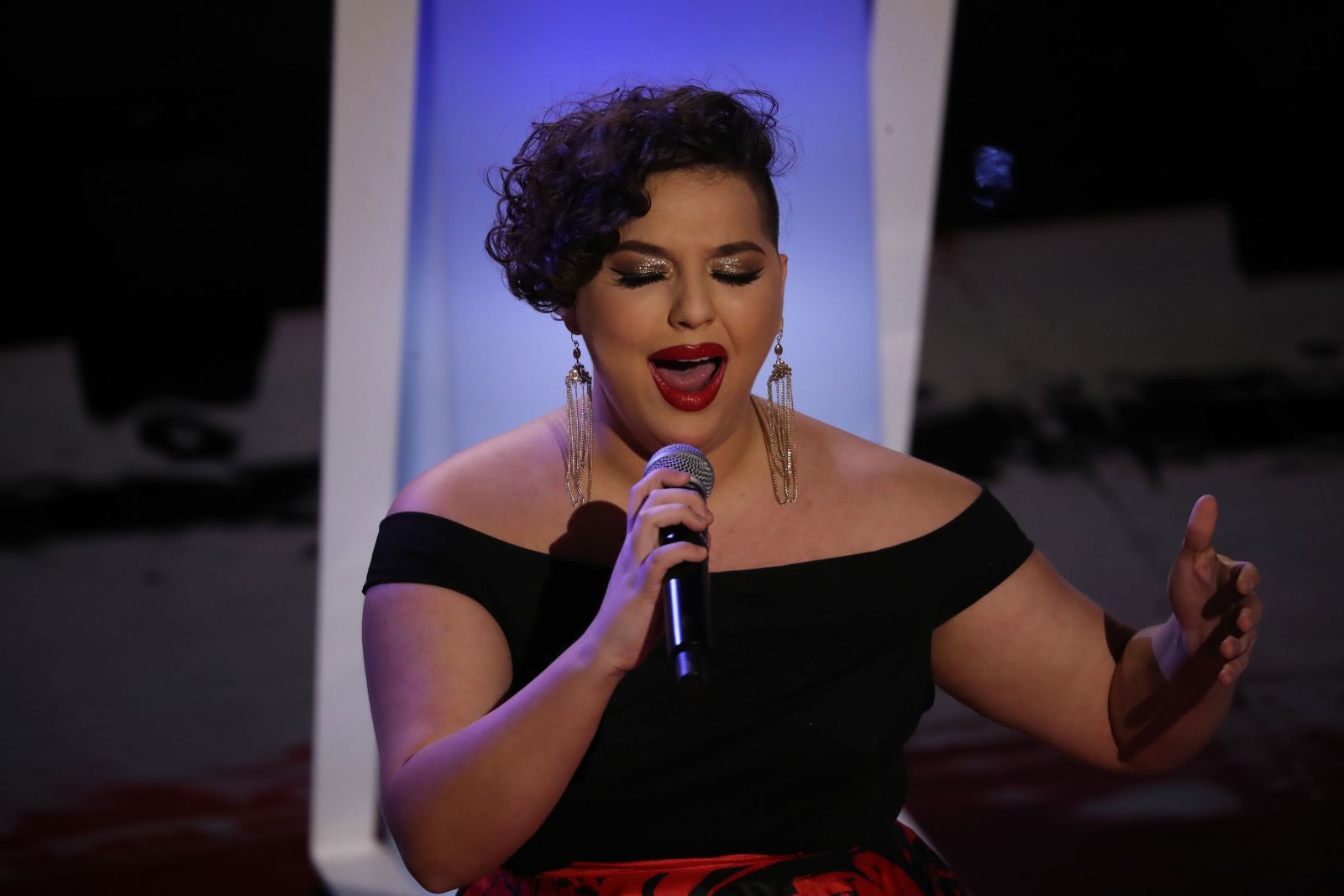
Sarah Rosales sings National Anthem. CNN image (above) image posted on Facebook by Sarah Rosales (below).


Gratuitous product placement image for my youngest sister--Drake symbol at site of debate, Drake University image. I posted it because I'm such a sweetheart.
Did you catch the Iowa CNN debate this week? I was busily grading papers with the TV on in the background on Tuesday night, so I half did. I hope my grade comments to students still made some sense.

Part of my reaction to this week’s media circus in Des Moines is that Iowa is just full of sweethearts.

I thought my current candidate sweetheart, Sen. Amy Klobuchar-Minnesota, did fairly well. They couldn’t get her to shut up, which is a trait that I’m OK with. You tell them, Amy.

Drake University image posted on flickr (above). CNN images from Tuesday of Amy crowd (below).


Iowa’s other sweetheart, our own Gazette columnist Lyz Lenz, was on the Daily Show that night, and she did well, too. She’s right—1972 paperwork caused the Democrats to have an early caucus, which gave Sen. George McGovern a minor boost.

But the real start of the show was in the next election cycle when both Iowa parties then agreed to go early in 1976. Tired of the Iowa Caucuses? Blame George McGovern, but mostly blame Jimmy Carter.


Side note: I know he’s really old, and I don’t agree with everything he’s said and done, and he’s also a man—but you’re a sweetheart and we miss you, Jimmy Carter. I know, he’s still kicking, but he’s almost as old as Bernie Sanders (not a sweetheart, but a fun guy). Hell, I even sometimes miss Georgie senior and junior. You guys were all sweethearts compared to The Don. I mean, at least in comparison.

Sarah Rosales-Des Moines Regiser.
Then there was Sarah Rosales, a Drake University student who belted out the National Anthem Tuesday night. What a sweetheart voice.

I wasn’t sure Elizabeth Warren was such a sweetheart Tuesday night. I was a bit miffed at the sideshow with Bernie—not because it would have been OK had he said a woman could not win, but because Elizabeth has been sometimes stuck for too long in side issues before that don’t go anywhere. DNA, anyone?

Anyway, the cast for this particular play was smaller, which maybe made it a bit duller. I hate to say I missed Marianne—because she was definitely not a sweetheart, she scared me—and I’m OK that Tulsi wasn’t there (not a sweetheart, either). But whenever Marianne talked, I felt like I was guilty of something, and I don’t even know what.

She and Tulsi did make a show livelier. Most of all, it's too bad Julian and Kamela are gone, they could speak and spice things up. Cory, I hardly knew you, but I miss you too.

Anyway, sexism is alive and well in American media. And on blogs. It’s probably not OK for a man to call a bunch of women he does not know personally “sweetheart.” That’s a pretty personal name, and I really only have one sweetheart. And I don’t mean Tessa Violet or even those British sweethearts in Big Moon who are my current musical fixations (along with Sarah, of course)—Audrey, you’re my one and only sweetie.

Lyz issues a reminder on Twitter. Apologies.
So, apologies to all. Iowa is full of sweethearts, but they aren’t all my sweethearts.

At least I’ll caucus for one. Here’s looking at you, Amy. And I will continue to enjoy reading another. Keep on typing, Lyz.

And I’ll try to keep my heart pure. And sweet.

 And now, some sweetheart music:


Saturday, October 19, 2019

The Beer Can Sign That Delineates Iowa’s Divide

Carson King held up a sign at the Iowa-Iowa State Football game asking for beer money, and like seismic forces beneath the earth’s crust pushing tectonic plate against plate, a Des Moines Register story suddenly caused a major media quake.

The fault line was already there. It’s easy to blame President Trump and his nasty “fake news” rhetoric, but his message resonates for some of Iowans. And on the King story, Iowa has gone beyond crazy.
Image downloaded from KCRG.com, credited there to KCCI. Carson and his sign.
The Des Moines Register, in the wake of King’s beer sign and online fund-raising drawing oodles of money for the University of Iowa Children’s Hospital, reported on some racist tweets King wrote as a teen. To his credit, King didn’t shy away from the truth, admitted he had sent tweets he now considered shameful, and apologized.

But there is a growing anti-journalism cultural strain that has been building up energy for years. The King saga, for some reason, unleashed an unholy upheaval that threatens to level the media landscape in its wake.

Well, good, some would say. Those nasty liberal Des Moines Register libtards are getting what they deserve. Who needs a newspaper—indeed who reads a newspaper—anyway?

I don’t think it was coincidental that Republican Gov. Kim Reynolds quickly joined team King. Republicans in the state, even before the fake-news-in-chief became president, have been divorcing themselves from traditional media coverage—refusing newspaper invitations to speak with editorial boards, not returning candidate questionnaires, never acknowledging that there is any legitimate or important role for traditional news media.

Image by Rod Boshart of the Gazette, King and Reynolds.
And after the economic recession of 2008, newspapers have been in a constant state of turmoil and retrenching. One can hope that the internet will allow more growth of viable alternatives for news, but sadly, the economic model of the online world heavily favors the giant corporations running the show and not the ink-jet-printer-stained wretches producing the content.

Anyway, the King story took on a wild life of its own. In its wake, for reasons that honestly make little sense to me, the entire staff of RAGBRAI resigned and have started an alternative Iowa Ride. Yes, I know, the Register would not let the director of RAGBRAI speak freely—but that’s not an unusual action for a corporation, media or not, in the midst of a crisis.

Why was the King story the trigger for this quake? I think it has something to do with a certain disdain for modern times that defines a kind of building cultural backlash. Iowans used to be known for being literate, well-educated and tolerant. That was then—maybe the 1970s or so. Now, we’ve underfunded our public schools for decades, trashed higher education and become more suspicious of newcomers and outsiders. In too many cities and towns, among too many white Iowans, casual racism is common and expected to be excused, especially if it comes from the young.

And we, good white Iowans, don’t like them darn liberals shaking their nanny state fingers at us and telling us we have to tolerate Mexicans and blacks and homos and all those others who don’t, by God, respect the imagined glory of rural America.

I think Gazette columnist Lyz Lenz says it well in a column posted this week entitled “We are missing the point.” She writes:
 “It’s telling how many white Iowans have mumbled to themselves about their own social media history, as if it was somehow a rite of passage to be occasionally racist in your past. It’s not, actually. Nor should it be. But we tell on ourselves with what we fear: We don’t fear racism, we fear being discovered for it. We fear the reporter asking about our misdeeds more than we fear actually doing them.”
The other thread of this odd saga is that people want their heroes unstained by reality. They want Carson King cheered, and nobody to look too closely or ask too many questions. This, for instance, is verbatim a comment on the RAGBRAI web site following the latest bicycle ride blow to the Register:
“Hey Des Moines Register, don’t bother trying to have your ride this year. Anyone can see how badly you’ve handled this situation and every move you make digs your hole deeper. There is no recovering from this disaster. After 11 RAGBRAI’s, I’ll be proudly supporting Iowa’s Ride and the people who stood up to your liberal censorship. To recap, your actions so far have been to drag a young man’s name through the mud (all while he was donating $3 million to a children’s hospital), drop a bomb into what was, arguably the feel good story of 2019, ruin the reputation and career of a reporter doing your bidding and now, ruin the greatest cross state ride in history. I hope the idiotic editors who chose to run that crap are happy.”
Well. I doubt that they’re happy. Carson King got a day named after him, and frankly seems to have behaved far more rationally than the crowd of King minions. And I don’t know how editors, in deciding how to handle the King story, could have or should have anticipated the bomb that the RAGBRAI staff had in store.

And so it goes. I do not think the Register showed good judgement in how it handled the original story—and I am also not so proud that the reporter, who himself was guilty of iffy past posts, was separated so quickly from the paper. But the Register’s story, even if it was badly done, was factual. The response to one editorial misstep has been beyond overboard—it’s a nuclear response to a spitball.

The Register doesn’t need to be burned to the ground, nor do its editors or reporters need to be threatened.

Right now, our nation is lurching towards a Constitutional crisis. And the election of 2020, already well underway in Iowa, is shaping up to be more bitter and divisive than the rhetorical blood bath of 2016.

And we Iowans are most outraged that Iowa’s largest newspaper would dare to actually research the social media history of a suddenly prominent person.

It’s not the only sign, if additional ones were needed, of how anti-media this once savvy state has become. Take the recent case of The Carroll Times Herald, a once daily paper that is now published twice a week. Last year, that paper investigated a local police officer and found that he, a married man, was having inappropriate romantic relations with local teenage girls. The girls were not underage, so the law was not broken, but the officer involved resigned and admitted in court afterwards that the relationships, which led to vandalism committed by jealous young girlfriends, were not appropriate.

And yet, the officer sued the paper for libel. The paper won. The judge issued a 10-page ruling that basically said the paper’s original stories were true. See the Washington Post’s story. Their image, below, had this caption: Douglas Burns, the Carroll Times Herald's co-owner, pictured at a newsstand. (Provided by Douglas Burns)

Picture from the Washington Post.
The prize for journalistic accuracy? Crushing debt for a small local business that has had to set up online fund raising in an effort to stay afloat.

The price of truth telling is getting higher, these days. Unlike the Register, the Times Herald, as far as I can see, didn’t engage in iffy editorial judgements—it acted as a good local newspaper should, as the watchdog for its community, pointing out the ill deeds of a local official.

And for that, it joins the Register in being at risk.

Too many of us have allowed a cancerous anti-fact and anti-news attitude to take hold in this once proud state. The most obvious tumor is the giant orange one in the White House, but his ignorant rants about fake news are just the outward manifestation of a deeper, darker cultural trend.

Trash the newspaper. Hate the messenger. Defend the “good” white Iowans. Look to the pastoral past, not the uncertain future. Defund education. Forget controlling pollution. Quit telling us this perfect place is at risk due to climate change or racism or other large demographic and economic trends that we don’t clearly and easily understand as our education system slips to third rate, our lawmakers forgo public discussion of key laws and our newspapers, sometimes quietly, sometimes loudly in a beer-fueled football induced earthquake, pass away.

I hope it’s not goodbye to sane, sensible, live-and-let-live Iowa. But I fear our knee-jerk online reactions, full of fury and feelings and fear of facts, are not signs that we are on the mend yet.

Friday, August 30, 2019

Memoirs that Make Me Wonder on The Why of XY

Earlier this on this blog, I noted that I enjoyed reading Michelle Obama’s memoir this summer.

Well, last night I finished “Godland” by Lyz Lenz. Immediately before that, I read “Born a Crime” by Trevor Noah.

Reading them back to back was not really by design, but it seems a fortunate coincidence. I liked both books—both authors have interesting stories to tell, and are worth your time if you enjoy memoirs. And I see some parallels between these works by a African late-night comedy show host and an opinion columnist at my local newspaper.

One uniting theme is that, for an old white man (today is by 61st birthday), both books have interesting insights into the lives of women. That may be obvious in Lenz’s book and less obvious in Noah’s. But Trevor Noah’s memoir is very much a rumination on his relationship with the single woman who brought him onto this globe—his mom, who was shot in the head by his stepfather.

Noah’s book first—it's filled with poignant anecdotes and is also quite funny. That may seem strange for a book that concludes with the aforementioned violence, but (spoiler alert), his mother survived with minor injuries, the bullet passing through her head without entering her brain or destroying another life-required structure.

The book is very accessible—the fact that Trevor grew up in another culture on another continent somehow makes the stories of his misspent youth resonate more. Weren’t we all young and awkward and struggling to understand our moms? But the book left me angry at the universe, in a way, partly because the man who shot Noah’s mother suffered very little in return.

The patriarchy strikes again.

Speaking of anger, there is a fair amount of it in “Godland,” but mostly there is a yearning for completeness and a quest for it. Lenz wrote about the time when her marriage broke down and she was left adrift, seeking a new spiritual home as she rejected the male dominated churches she had been at home in.

The end of “Godland” is pretty powerful, and sneaked up on a me a bit, just because I had not looked ahead and didn’t know the number of footnote pages there would be. I was reading last night, and thought that this chapter, about her experience in a new church, not only seems pretty powerful, but is bringing the themes of this book together.

And I turned the page, and there was half a page of text facing footnotes. Well, cool? Except I wasn’t quite ready for it to be over, and I wish Lenz had written more. Well, that's a measure of a book you like, I suppose, that you yearn for the time you engrossed in it when it ends. At least with her new job at The Gazette, I'll be getting fairly frequent Lenz fixes anyway.

Although both Lenz and Noah have very different religious attitudes and different faith backgrounds, God is a potent character in both books, too. Across time and continents, Jesus can provide some pretty universal themes, which I guess is not really a surprise, but was interestingly on display in these books.

One contrast between these two books is that Lenz does a lot more reporting, while Noah is sticking with his personal experiences. Yet, Noah’s book, which roams over his childhood, high school years and early career, felt “broader” to me. It stretches over more time in his life, while Lenz wrote a tighter personal narrative on a narrower snapshot of her life.

Still, my own personal journey was, in some small measure, enriched by these two writers. And as an old man, I don’t feel that I understand women—but then again, they don’t understand me. In fact, I often don’t understand most men, either—in this life, gender is significant, but not the full story of our joint and severed humanity which makes all of us complicated individuals.

And I consider myself a feminist. I want all humans to be unfettered by biology in their personal journeys—life will throw enough barriers in our ways, we don’t need assumptions or ideas about masculinity or femininity to add to our burdens.

Yet, as demonstrated in both books, women have challenges that are weighted differently. Being heard. Being accepted as leaders. Being paid. Being acknowledged as full-fledged adults. And also, not being shot in the head by angry significant others—those are all human struggles, but they fall unfairly on the XX chromosome-bearing members of my species compared to those of us who express XY traits.

I don’t know why. The reasons are complicated.

And although answers may be elusive, the injustice is simple to see. And both of these books help with that.