Showing posts with label TV. Show all posts

Sunday, December 22, 2024

Lesson of ‘Lasso’: Don’t Assume You Know Their Story

One of the reasons I became a fan (in relatively recent years, it was long after it aired that I got around to watching it) of the old TV show “Buffy the Vampire Slayer” was the way that it played with and inverted tropes. The monster and the pretty blonde head down an alley—but in the end, it’s the Boss Ass Bitch Blonde who emerges and the monster who gets dusted.

The show was of uneven quality, as all, even good, long-lasting TV shows are, so it’s been a joy in recent years to see creators playing with trope-inverting or avoiding scenarios in series that are designed to be contained in a short run. Think “Derry Girls” or “The Good Place,” shows that reached a planned destination, destined to let the arc of their story burn out in a pleasant way.

No jumping the shark for these quick series. The experience of binging them is a bit akin to reading a good book—you get engaged, you grow to love somebody, and then, too soon, it all ends. Better too soon than too stale, however.

I don’t know exactly where she heard about it, but my wife, before her birthday this year, expressed a desire to experience the 2020 Apple TV show, available on DVD, “Ted Lasso.” It’s origin is a little weird because it is a series based on the premise of a humorous Super Bowl commercial, about an American football coach who heads to England to coach a soccer team.

Coaches from Los Angeles Times story, Apple image: Brendan Hunt, from left, Jason Sudeikis, Brett Goldstein and Nick Mohammed in “Ted Lasso.” https://www.latimes.com/entertainment-arts/tv/story/2021-09-01/ted-lasso-apple-tv-cast-episodes-guide

Well, the watching of the three seasons of this short series turned into its own minor saga. We started, and loved, season one in November shortly after Audrey’s birthday—but the DVDs, that I had purchased online from Wal-Mart, proved flawed—at the end of each disk, the final episodes would deteriorate into a pixelated jumble like someone was drinking too much of Coach Beard’s girlfriend’s tea (opps, yes, on this blog post there may be some minor spoilers).

We made it mostly through season one, but decided not to proceed, instead returning the DVDs to their source and getting a refund (to Wal-Mart’s credit, that was not a difficult process). And then my wife, shortly before our anniversary, found copies locally—a different edition, but that gave us some hope. Anyway, I was trying to figure out what to get her for Christmas and suggested I would find a different source for “Ted Lasso,” when she fessed up that she had already bought me an anniversary present.

Yup. The day before our anniversary (Dec. 18 is when we got married), we jumped the gun and inserted the new DVDs, which proved less jumpy. And so, the first half of my Christmas break from university teaching this year consisted of a marathon, watching “Ted Lasso.”

Three characters watching final game
From “Deadline” review, Apple TV image of Keeley Jones (Juno Temple), Rebecca Welton (Hannah Waddigham) and Leslie Higgins (Jeremy Swift) watching the final game in the final show. Use Google and check out the cast, it’s amazing. https://deadline.com/2023/05/ted-lasso-hannah-waddingham-season-3-series-finale-interview-spoilers-1235383916/

And, liked Sam and Rebecca, although in a less doomed way, I and my wife fell in love. “Ted Lasso,” TL from now on, is marvelous. It you enjoy a sometimes funny, sometimes deeply poignant TV show, full of interesting, quirky characters and emotion, TL is for you.

TL succeeds for many reasons—an excellent cast, of course. But mostly, excellent writing that inverts tropes and expands the premise of a Super Bowl ad into a fully imagined, fantastical, fictional but real feeling, story.

A short summary of just some of the trope inverting: There is the optimistic, clueless football coach who knows nothing of soccer—who turns out to be an insightful, talented, intelligent man whose cheery demeanor can’t hide his intellectual depth, and who has his own complex back story that explains some of his quirks. There is the pretty model girlfriend, who turns out to be a scrappy, smart, hard-working, creative business woman whose sunny disposition again can’t hide street smarts and drive. The statuesque “Boss Ass Bitch” who begins the series intent on destroying the soccer club as revenge against her philandering ex husband (and who is inevitably converted to an ally, partly through the unexpected power of Ted Lasso’s baking skills).

The soccer players are self-absorbed pretty boys—who each has a real life and unexpectedly complex motivations. You hate the pretty boy bully at first, and later you don’t love him, but I felt way more empathy for him after you see him grow up a bit and you meet his disappointing, disapproving dad.

Athletes in locker room
Zava, the avocado-raising Italian soccer miracle, leads the Richmond Greyhounds in pre-game meditation. Apple TV image used on NPR review of Season 3. https://www.npr.org/2023/04/15/1170074939/ted-lasso-season-3-review

It’s nice to see a TV show that highlights a point I remind myself of in my professional life when dealing with college students. Don’t assume their motivations. You don’t know their stories—and everyone has a story.

And it’s not just that in TL tropes and stereotypical characters are often reversed—the show, under the veneer of its breezy, silly premise, explores depths most TV comedies don’t touch. One of the recurring themes in TL is the challenges of parenthood, particularly fatherhood, and the long-lasting damage or positive energy a dad can deliberately or accidentally impart. Another theme is how most villains (with the possible exception of the watcher from Buffy who grew old and grew very, very evil) are not full villains, and most heroes have flaws and make mistakes. Few people are as bad as or as good as they seem.

The other quality of this show is the way it delivers unexpected twists. It’s a sports saga that, particularly in the first season, doesn’t go where you expect a sports saga to go. Sometimes, your team, with all its heart and moxie, doesn’t achieve its goals.

How can you respond to life’s disappointments and heartbreaks? The show has some ideas. “Be a goldfish,” Ted Lasso says—get over your mistakes and move along. Well, even he is not entirely serious about that in all cases, because some setbacks are too big to forget and some require a good confidant—be it wise girlfriend or therapist or circle of Diamond Dogs—to process and get through.

There are a lot of potential coffee mug sayings from this show: Be curious, not judgmental. Grow up and get over it. Taking on a challenge is a lot like riding a horse—if you’re completely comfortable, you’re probably doing it wrong.

Good as they can be, these slogans aren’t TL’s main charm. Mostly it’s that, a bit like Buffy did, this is a show of consequences where the characters remember what happens to them and relationships change in lasting, transformative ways.

Ted learns to set his wife free, even though he does not want the divorce. Leslie Higgins (one of my favorite characters) has built a life with his wife and sons, but deeply misses and mourns his dead cat, Cindy Clawford.

In the end, I think the main message of the show is summed up by Roy Kent, the eternally grumpy player turned coach, when he asks the Diamond Dogs, “can anyone change?” Roy’s been trying, but feels like he is failing. The dogs bark various answers, and they aren’t simple nor straightforward. No, you can’t convert yourself into someone else, you can’t will yourself into perfection or an idealized version of yourself. But yet, the striving, the attempt to change, it can nonetheless help you build better relationships and a better life. Higgins said that, in better words, and you have to watch the final episode, or this excerpt, to get a better version of that advice.

In the end, we know Ted will come home to be more of a father himself. But we are cheered that Coach Beard fakes appendicitis to stay in England with his weird love who nobody else understands but who nonetheless completes him.

TL is, like all TV shows, a bit uneven. I felt the third season dragged a bit for me, and some of the story arcs in that season didn’t have all of the surprises nor emotional heft of seasons 1 and 2. But the seasons are short, and none are bad. You can binge the whole run of the show in a week, especially if there comes a cool winter Saturday, perhaps the shortest day of the year, where you and your wife can snuggle on the couch to watch the coach, snack on bad food and just spend that day seeing Ted and his friends and freinemies find their crooked path through this crooked world.

TL exceeds Buffy for lots of reasons. The characters are more adult, the run shorter and more condensed so it’s spicier, like chili left to simmer for a while. You can finish a 30-minute episode and be a bit off balance, startled at how much can happen in a short show. Maybe it’s the one where Coach Beard gets lost and finds himself in disco church. Or the one where Ted finally finds he needs a therapist. Or when a 13-year-old girl helps Boss Ass Bitch compose a business email. Whatever.

It's a show full of heart. It will leave you wanting more, and, paradoxically, grateful that there isn’t more because the show has logically played itself out and didn’t stay too long.

Like “Derry Girls,” TL is a TV show world that you may visit and binge again. Even if you’re not a goldfish, because you will always remember this.


Tuesday, March 26, 2024

How British Characters Get Dead: Politely

MidSomer Murders Cast
Image of characters in “MidSomer Murders” from https://midsomermurders.fandom.com/wiki/Midsomer_Murders 

My wife and I recently have been enjoying a 20-year-old British TV show, “MidSomer Murders.” MidSomer, which I had incorrectly re-wrote in my mind as “Midsummer,” it appears, is a county in England, full of villages with rich, interesting, aroused, murderous people.

It’s entertaining on several levels. For one thing, compared to most American crime shows, the show demands a lot of its viewer in terms of trying to follow multiple characters and multiple, convoluted clues. Frankly, even the creators got sometimes sidetracked—in one episode we watched, there seemed to be four murders, three of which were solved and one of which was forgotten.

And then there are the character types that the show uses, which are significantly different than characters seen in American TV crime shows:

  • Horny old ladies. Lots of suggestive looks and double entendres from gray hairs who clearly aren’t yet done.
  • Horny middle-aged people. Hollywood acts as if everybody who is an object of desire is 20-something and hot. MidSomer Murders acts as if everybody is 40 or 50, and mildly attractive, and very hot to trot.
  • Weird, dysfunctional families. Way more brothers and sisters or people who are brothers and sisters and don’t know it who deliberately or accidentally ending up, well, you know. Yikes! Everybody is horny. Watch out for the vicars, too.
  • Killers with strange, obscure motives. Maybe taking revenge for the other crime that happened 120 years ago. Sometimes there’s a slightly supernatural twist—a ghost or “second sight.” Sometimes, the jilted wife is enraged because the husband’s lover has refused him and yet he still loves her and somehow that justifies killing some third party. Motives tend to be a bit complex in this universe.
  • Children who are not always cute and cuddly. They often are up to their own nefarious deeds. Facts.

There are also the British settings. Spooky, foggy woods. Old houses. Big old barns. Ancient churches. Broken down trailers/train cars/shacks that some old hermit occupies, sometimes as victim, sometimes as killer, sometimes as weird antihero.

Then there are the recurring characters in the series—Chief Inspector Barnaby and sidekick (there have been more than one). He of the heavy gorilla gate, walking like a tired linebacker through murder scenes, musing to his sidekick about when he is being lied to or who is to be trusted—always, in the end, figuring it out.

The Barnaby family, from http://midsomermurders.org/fitmurder.htm

She’s not in every episode, but we’re both fond of the inspector’s daughter, who adds some levity to the show. And there are jokes about Mrs. Barnaby, portrayed as an intelligent woman who totally lacks culinary skills (her terrible cooking is an ongoing joke of the series).

And then there are the murders,
the weird, entertaining, strange English slaughters. Is the murder rate so low in England that English writes have some trouble understanding how murder works? There are a fair number of shootings, despite strict gun law, but often the murders are overly creative, weirdly complicated and seem like enormous gambles—if you shove the old guy over the edge of the bridge and he falls 5 feet into the shallow stream, how can you be so sure death will be the result? The killers are really lucky in this show.

A typical murder scene: There have been several people in the bell ringing choir or lollypop guild or some other select group, found over the past couple of days with skulls bashed in (or burned inside an effigy or shot at a distance with a target arrow neatly through the heart—don’t he British have any hunting arrows?). Yet, victim number three in the targeted group hears a suspicious noise in the West Wing. She puts on her dressing gown and gingerly pads down the hall, oblivious to the spooky music playing. Suddenly, from behind, we can see the candlestick—odd that, on edge as she should be, she didn’t sense someone walking behind her—and, after she turns and stands still with a frightened look, wham.

Well, a hard clock to the noggin will do it. Yet, so often, the victim sees the murderer brandishing said candlestick, and yet just stands there, a slightly surprised look on their face, awaiting the right moment in the musical score for the big swing. So polite and cooperative, these English murder victims.

In one episode, an antique dealer enters his establishment, packed full of stuff. Far above him, a desk is slowly pushed off of an edge. He stares blankly upward, watching gravity perform its inevitable function. Step to the side? Lift arms to shield head? No, that would be rude—it’s so much more polite to just stand there and wait for the blow, because, well, British.

We’re in the an early season of the series, and my wife has seen more of the shows than I have (a retired person has more evenings free for TV viewing than an employed professor does). I know from looking online that this long-running series, which began in 1997 and was still going on in 2023, goes through a number of cast and character changes, so the current inspector Barnaby may not be forever, even if murderous and horny MidSomer County is.

We’ll have to see, but as we get to more modern times, more recent years, are the aged still randy? And do the murder victims still stand there and politely take it? One can only hope so.

Saturday, December 31, 2022

Remembering a Key Figure of the Big 3 Era

Barbara Walters in 2008
From Wikimedia Commons, an image of Barbara Walters at the Metropolitan Opera in 2008, posted on flickr by Rubenstein, link to image.

“Every female broadcast journalist working today owes a debt of gratitude to the O.G., Barbara Walters, who died Friday at age 93.” Katie Couric, writing in The New York Times.

There was Walter Cronkite. There were Chet Huntly and David Brinkley. And there was a woman, a fiercely talented, competitive person named Barbara Walters. No, I don’t mean she was a TV giant of the stature of a Cronkite, but she was an important TV personality who brought needed change to a male-dominated medium.

I first became aware of her in the late 1960s as my family sometimes had the Today show tuned in on our 19-inch black-and-white TV.

I don’t recall her much from that time, but I was young. I became more aware of her as the first female network co-anchor starting in 1976 on ABC, a gig that honestly didn’t go all the well. But as she had done many times in her long career, Barbara Walters had the courage to try something new, and after she was an anchor, she reigned as the queen of celebrity and news maker interviews, first at 20/20 on ABC, and then in a series of prime-time specials.

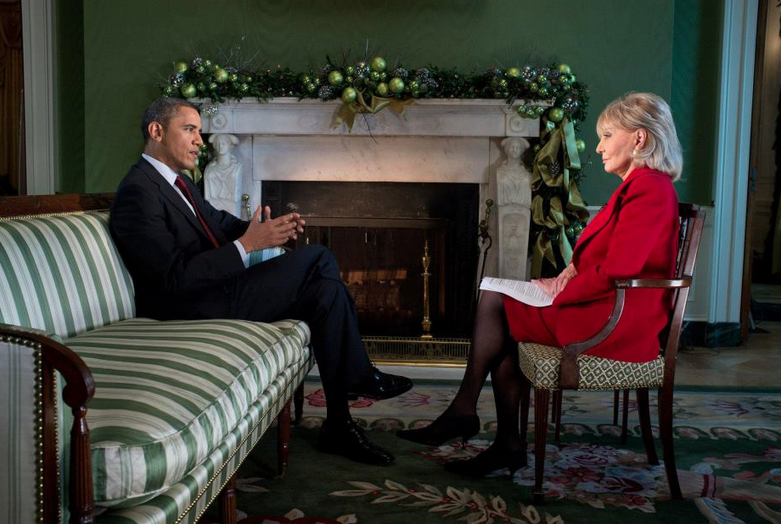
Barbara Walters with President Barack Obama
An image of Barbara Walters speaking with President Barack Obama on Jan. 20, 2013. Image posted on flickr by Ester Vargas, link.

At an age when many people have returned, Walters in her late 60s helped create The View, a daily talk show, in 1997.

The news today, of course, is that Barbara is no longer with us. She has died at age 93. An important female figure of the Big 3 TV era is gone. Her passing is a reminder of that bygone era, and her long career a testament to her tenacity and talent.

Tuesday, March 22, 2022

A Classy Class Visit from Another Tiger

Nicole Agee
Nicole Agee speaks March 22, 2022 in a Mount Mercy University journalism class. This image was made by a student in the class--images in this post are about half my work, half student work.

The focus of good journalism shouldn’t be the journalist—an important point made by Nicole Agee, a local TV anchor (KCRG-TV Channel 9, Cedar Rapids, Iowa) in one of my classes.

“I’m not the story, the people I interview are the story,” she said.

Agee kindly volunteered to visit the class and talk about journalism storytelling, in particular, storytelling via video. As a sample, she showed a clip from KOMU, the Columbia, Missouri TV station associated with the University of Missouri-Columbia School of Journalism.

In video, the images and sounds are a key part of the reporting. Video in a story, Agee said, “takes the place of words.”

Nicole Agee
Here and below, four more image of Nicole Agee speaking.

Nicole Agee

Nicole Agee

Nicole Agee

It’s a large and complicated idea—it helps explain many of the differences between journalists who primarily work in words (we used to call it “print,” although these days, I read New York Times stories on a screen) vs those who are using video recordings. Agee also noted that radio, such as presented by NPR, is another medium with its own story telling style.

But whether words, video or audio, a journalist needs to be an accurate and compelling story teller.

Besides that, I think a beginning journalist needs to be ready to dive in—to get more experience however they can. Agee herself noted a history as a high school and college newspaper journalist before pursuing a graduate degree in broadcasting at Mizzou.

Agee also had some interesting thoughts on the skills needed to be a journalist. Primarily, she argued for the centrality of journalistic curiosity. “We want to know more, we want to know why,” Agee said.

In fact, she said it’s easier to work with a curious new journalist than with a new journalist who considers themself primarily a great writer. “It’s easy to train somebody to write well,” said.

Well, she’s wrong about that and right about it at the same time. A person has to have some base level language expression skills in order to be competent enough to be trainable as a writer. And I think curiosity is a driving force of most really good writers—to be a writer is not just to have facility with the language, it’s to have facility with ideas that can be expressed in language, which requires curiosity.

Student in class
Annie Barkalow, managing editor of the MMU Times, listens to Nicole Agee.

But she’s right, too. Given a base level of writing competence, it’s easier to work on the information processing skills—whether writing, making images or shooting video—of a curious person. Students who struggle in one of my editing courses don’t always agree, but anybody can learn to create a page or web site using InDesign. What’s harder to teach is what should be on the page.

What’s required is the curiosity to seek new answers to common questions. Where do you go for information? What information is important for an audience you’re serving?

Curiosity may kill cats, but it is the life force of journalists.

So, although I work a lot at trying to teach writing—I think I’m fundamentally in agreement with Agee.

Me with camera as student watches
Me, helping a student solve a problem with a camera.

She made another key point, too. That is, a journalist must cultivate connections. She referred to building a personal Rolex when you arrive in a new community (while noting the term is outdated, today a network of contacts may be more related to a list on an Android phone than written cards that are quickly becoming antiques). In other words, a good journalist is active and aware and builds contacts before they must begin working on a given story.

I like to think of it as related to the role of imagination in journalism. That is, journalism, if done correctly, is not at all fiction. None of it is made up. But a journalist must be able to see possibilities, to sense patterns—not to impose narratives, to but recognize them and act on them. That’s related to the challenges of writing and editing, but also to the ability to think creatively when casting the net for information—for cultivating and well using a wide range of connections. An information, or source, network.

Nicole Agee
I can't imagine what Nicole Agee was thinking about here, but whatever, it was worth listening to here.

And the best photographers and videographers also have imagination. Again, not for deep fakes, but to know when to shoot and what to shoot and where to be to get the image or the recording.

The class Agee visited was small—the smallest introduction to journalism class I’ve had in my time as a professor. Yet, as she noted, the skills one learns in a newsroom—working on deadline, being flexible, imaging the possibilities, acting on your curiosity—serve professionals in a variety of circumstances.

She was speaking of the many former journalists she knows who are working in other venues. I think it is one reason why college journalism remains important for a university. Of course, student journalists serve their community as journalists serve any community, by making overt what is hidden and should be known. But they serve themselves, too—developing habits of mind and skills that are keys to a curious, interesting, well-written life.

Nicole Agee
Final image.


Saturday, September 5, 2020

Saturday on the Video Channel

You Tube! Love it and hate it. Like most social media, it can be a conduit for hate and misinformation.

But it provides an old man who honestly is of the TV generation with an addictive and pleasurable screen experience.

I grew up on TV. I hate to admit it, and I know my young life would have been better spent with less TV. Television is not called the “boob tube” for nothing. I was lucky, in a way, that I grew up in a bookish family, so at least I did start reading young, and although I’m a slow reader, I do enjoy it and still do it. Art Cullen, I’m working my way through your book “Storm Lake,” and I’m sure it’s doing me a lot more good than anything on TV or YouTube ever did.

But maybe “working my way” is an implication that reading is cognitively more complicated than the experience of having pictures flash before your eyes and hearing sounds that are pleasurable, for some reason.

Anyway, back to YouTube. Part of the issue with TV is that, even in longer programs, it’s flashes of quick images. While it’s possible to follow a longer plot and some complicated thought through the tread of a TV story, for the most part, I think, my brain is not that engaged by most videos. I tend to consume YouTube at times of rest—at night after completing a task (like tonight, for instance) or while eating lunch.

What have I been dipping into while editing images and preparing world-famous blog posts? A mix, which is what YouTube tends to provide. It’s quick snacks, which can be satisfying if not always mentally as stimulating as a book about Northwest Iowa can be (I’m ¾ of the way through “Storm Lake,” and I do recommend it).

So here is just a rather random look at what I’ve been mindlessly hanging with on a Saturday night:

Tunes—I use Pandora on several computers, but sometimes let YouTube play DJ for me. A small smattering of my Saturday playlist:

1-Taylor Swift, “You Need to Calm Down.” This 2019 song is probably not that musically sophisticated—pop songs usually aren’t, I suppose, but I’m not really a music person. I just enjoy the music I enjoy, and for whatever reason Ms. Swift hits my buttons with this one. It’s an “I need to smile, let’s play some Tay-Tay” song for me:

2-Garbage, “Empty.” A 2016 video from these 1990s rockers. Not exactly as bright and playful as Taylor, but still this song often sums up my mood when I’m frustrated (as who isn’t in 2020) and makes me feel better:

3-4-"Bailo En Mi Cuarto" by Anne Reburn, Dubax, HarryU and Debi Gutierrez; and "Bored" by Tessa Violet and MisterWives. OK, I do like male singers, too. I’ve played a few Red Hot Chili Peppers tracks in my Saturday jam, too. But I do have an appreciation of the female voice, for some reason. Anne Reburn does many entertaining covers and her own original music, too. Tessa Violet is the same, in a way, in that she has done many covers, although she’s further in her career and does more of her own original music. Anyway, both of these talented women teamed up with others on two songs that are both resonate with my life in 2020. Come Monday, when classes start, I may be a bit less isolated than I want to be—but 2020 has featured lots of alone time, and these two artists teamed up with other singers and with fans to collaborate on social musical videos about 2020. Maybe YouTube does have something to offer:

Music is, of course, personal as well as social. You like what you like and it may or may not appeal to me. I will credit YouTube partly with expanding my musical horizons a bit. I think we all have a special relationship with the music that was popular in our formative years, and I feel that YouTube playlists both can bring me back that music whenever I want (Simon and Garfunkel have some great videos), but also bring me new music.

And YouTube bring me video blogs. As a blogger, I particularly appreciate the Vlog Brothers. So:

5-Hank Green, Vlog Brothers, “Go Play!” The next book in my reading cue, right behind “Storm Lake,” is the second novel by this bright writer, who is also a YouTuber, along with his brother John. And I just really like this video. It made me think of my son Ben, who has a PhD in Math from ISU. I’m curious about what he thinks about the joy of math:

I use YouTube to watch some news content, now and then. But I do like some quirky content that isn’t available elsewhere. I read “The Gazette” for news, listen to NPR and let Rachel Maddow explain the world to me a few nights a week. I have CNN and Reuters on my phone. So YouTube is for “news” that’s a bit more, well, different.

For example, what do you know about bird penises? Don’t think Joe is about to get weird on you—I love a YouTube channel called “SciShow” and they give me information on all kinds of topics, including updates on COVID-19.

6-SciShow “Why Did the Rooster Lose Its Penis?” Besides posing a clickbait question, the video is interesting to me because it basically does not answer the question. The true answer is that science doesn’t know why—but evidence shows ancestors of most birds probably did have external male genitals, so somewhere along the line many birds lost theirs. I think it’s just fun to listen to the SciShow people explain interesting, quirky topics like this (and Hank Green, by the way, is one of the driving forces behind this channel and hosts may SciShow videos, but not this one):

I like several informative YouTube channels. Dr. Emily Zarka on “Monstrum” is a favorite. I watch most videos on PBS Eons, too.

So that’s it, my Saturday six. It’s not a complete list of my YouTube habits, and one of the dangers of the internet site is that its addictive nature challenges a viewer to not over do it. I didn’t get into “The History Guy,” for example, or Jim Gaffigan or Taylor Tomlinson, two of the several comedians I like to enjoy on YouTube. I often sample videos from the late night talks shows—I miss your “Colbert Report,” Stephen, but still enjoy your stuff.

I’m not trying to cover all of my liked videos. I just decided to post a bit on what I happened to be enjoying tonight while thinking about the nature of this hugely important internet site. Like all social media, an issue with YouTube is that it is, in a way, user constructed—what I watch tends to lead to what I’m fed. That means that rather than an open world where I might see anything, I’m actually seeing a rather narrow neighborhood crafted from my personal preferences.

I don’t hate that. But I do need to be aware of it, to, and actively break out, now and then, of my own neighborhood. So besides trying to ensure I don’t spend too much time on YouTube, I also am interested in suggestions that don’t come from the internet algorithms.

Consider this post, to some extent, a few suggestions for you if you too are taking a break this Saturday night. And based on what you see here or what you may know about me, what would you suggest I sample next?

Saturday, December 22, 2018

The TV Don Who Stole Christmas


Starting with the SNL cold open Dec. 15: “It’s a Wonderful Trump,” there have been several examples this week of how tied to TV our president is.

I don’t know exactly which dig touched Donald’s not-funny bone: Maybe it was imaging Melania divorced and speaking perfect English because Trump had been holding back her language skills. Or the repeated “Everyone is better off without me being president.”

Whatever it was, the president was pissed. And he threatened legal action in a post-SNL tweet:


It was a ridiculous tweet, but let’s not so easily let go of the fact that Trump thinks he should have some legal recourse for this SNL segment, and also sees some vast conspiracy, tying an NBC comedy show to news coverage.

Was the SNL bit harsh? Sure. Was it illegal? Hell, no. Not even close. The whole bit was so over the top nobody would this in was asserting actual facts. And even if the criticism of the president was over-the-top, it was totally fair. Americans get to be critical of their leaders—as Donald was of President Obama not that long ago.

And, honestly, I didn’t find any of the criticism to be all that extreme. Ever since his party lost control of the House, President Trump’s administration seems to be lurching, leaderless and falling apart. We seem to be entering a new a sinister time.

And the president’s relationship with TV is a huge part of the problem. Not one week after his odd, inappropriate and, frankly, un-American reaction to the SNL skit, Trump was at it again in a more serious way.

At the end of the week, the House and Senate passed temporary funding bills. The President spent the week sending mixed messages about whether he might sign the bill, based on whether money for his favorite bad idea—the Trump Tolerance Monument known as The Wall—was included.

It looked on Thursday like he would accept it. After all, it wasn’t that long ago that Mexico was going to fund the TTM, was it? But then, Fox News and Rush Limbaugh intervened.

And Trump blinked, decided to go ahead with a shutdown. Colbert sums up the flip flop:


What is the end game? I don’t know, but I am not filled with confidence. The adult rats are all busily scurrying from the Trump Titanic presidency—and, meanwhile, President Trump is taking his cues and advice from “Fox and Friends.”

Republicans in the Senate, especially from Iowa—do you not see this? Ernst, Grassley, is this presidential leadership?

We’ve hit a wall here. And it’s a wall partly built on an odd, inconsistent president who is easily manipulated by the boob tube: President TV Trump.

Friday, January 13, 2017

Is It Safe to be Back on the Grid?

Not sure how to use this thing. I need my 5-year-old granddaughter to visit.
 More than a year ago, we cancelled our cable TV.

The first-year price deal was gone, and the rate hikes were pretty bad. The TV provider also provided our land-line phone and internet service—and we decided that: A) Even old people don’t need land lines and B) Why are we paying that much for internet service when other providers are less expensive?

So, we bid Mediacom farewell, and, frankly, after the breakup we haven’t missed our ex at all.

But our new internet service provider changed rates for the new year, again after that first honeymoon year was over. Fortunately, they didn’t jack up the rates so badly that we were going to shop around again—and, oddly, the price change included an unexpected deal.

For X a month, you can access Facebook and WordPress and Blogger. For X plus $5 a month, you can also add DIRECTV.

Well, OK. In the past, again when the cable era was ending, we had thought about various satellite options—but we have a jungle to our south. Our yard includes mature oaks, a giant maple tree near the house and a young tulip poplar that is already rivaling it’s much older arbor competitors in height.

My wife pays the bills and texted me about the TV offer. I replied that I thought it was a good price, but I wondered if we would be able to have a dish installed given the treescape.

She said the person she spoke with at DIRECTV said it should not be a problem. I wondered if that were true, but said “OK.”

So today, the Satellite Guy showed up. “Do you have a dish?” he asked. “No,” I said. “OK,” he said, and then we wandered into the backyard. And he looked up and looked a little discouraged.

“Those are some big trees,” he said.

But then he went into the front yard and figured out that at the extreme northwestern edge of our roof, there is a tiny window of open southern sky, apparently allowing the satellite signal through. And so, DIRECTV has been installed.

Up in the sky! Neither bird nor plane. Dish.
Just in time.

What an odd media week this was. I am struggling, a bit, with what to write about for my Corridor Business Journal media column this weekend—it’s supposed to be about local media, but honestly, my thoughts and attention have been mostly national.

The week included Meryl Streep at the Golden Globes, and some of the predictable right-wing reaction that “you Hollywood leftists should entertain us and shut up about politics.” That reaction has a bit of a point, because I agree entertainers often speak out politically in ways that feel childish or trite, but Streep wasn’t talking about policy so much as she was taking Trump to task for being, publicly, an appalling communicator—in short, she was speaking in her area of expertise. And, even if she supported Clinton, on this particular subject she was spot on.

Next this week came Obama’s farewell address. It was a little weird, staged as it was in a big Chicago venue—it harkens back to the kind of rally that POTUS held in 2008 when he was first running to be elected. I think he was smart in a way to go with that kind of place because it’s where he is at his best—somehow, playing to a large crowd relaxes him and helps him break out of his often too-stiff persona. It was a powerful, thoughtful speech, and he made some important points about media. We indeed are seeing our democracy threatened by competing media walled gardens that have subdivided the marketplace of ideas.

Wow. It was only Tuesday. And the POTUS-elect hadn’t even yet had his press conference.

And then Trump did. It was awful. I’m not trying to make a political point here—but his demeanor, arrogance, the way in which the press was crowded into his lobby and berated by his own supporters—it may have been effective, it probably did inspire his insipid storm troopers, but it was truly horrible. It was authentic Trump in his repulsive splendor. It was almost heartbreaking to compare the grace and class of President Obama speaking with the petulance and bullying of President-elect Trump.

I mean, really. I felt myself ready to hurl at my computer a couple of times. Trump says he could run his business and be president, and he is the only person who could? It seems he can’t he go on for more than a few inarticulate sentences without spouting shameless nonsense.

And his defense of the obscene behavior he was alleged to have engaged in while in Moscow? That “there are cameras everywhere.” And he doesn’t like germs. His denial was weird and left me wondering how he acts when he thinks that there aren’t cameras around (yeah, I know, we’ve already had some evidence on this point). Even when Trump is correct—and I am not going to defend Buzzfeed for what they released—he can’t help but also be awful.

Well, I viewed the very Putinesque press conference online, not on TV. Streep I caught on YouTube. And the POTUS speech I watched on TV at the gym.

Now, I could watch them all at home on the big screen.

I must admit it’s a bit too easy to curb my enthusiasm. One week before Trump takes office, and I’m ready to view the new post-democracy era in America in HD TV in my own basement.

Yippee.