Stories that we tell say something about what we, collectively as a culture, believe about certain roles. And, while it was a while ago, June is the month of Father’s Day, so let me ruminate on fictional dads that I find to be decent fatherhood role models.
Because I am a dad. A grandad now. Which means I have thoughts on fatherhood (as does everyone else, I’ll concede). (Aside on images: All are publicity stills used in media, original sources are Disney, Pixar and Netflix. I don’t own any of the images.)
How well did I fulfill the role of father? That’s not for me to answer. And fatherhood is a role that we fall into--not always unexpectedly, but raising any child is a wondrous and scary and surprising adventure. I, for one, don’t think there’s just a one-size-fits-all answer to what makes for a good parent, anyway. After all, we’re complex sentient animals with big brains that complicate everything. What’s best for one dad- or parent-child pair does not always work at all for another
All dads muddle through, just as all moms do. The good news, I suppose, is that attitude makes a huge difference, and any parent who at least takes the role seriously and tries is likely, in the end, to do OK.
By the way, while men and women are not identical beings, I’m not one who believes the role of “dad” is always sex specific. So, for the many females out there fulfilling dad functions—good for you, and in commenting on fictional male fathers, I’m not trying to be exclusive to the XY genetic pattern.
Anyway, here are four fictional fathers of recent years who represent, to me, each some positive aspect of fatherhood:
 |
| Catherine Zeta-Jones as Morticia Addams, Luis Guzmán as Gomez Addams. Embarrassing their teen daughter with a PDA, as good parents ought to. |
1-Gomez Addams from the Netflix series “Wednesday.” Spoilers coming, so back out now, if you need to.
The Addams Family is an interesting set of tales, starting as it did as a series of cartoons, spawning a 1960s TV series, movies both live and animated and now this streaming series. I’ve already noted that I am a fan of “Wednesday,” the Netflix contribution to this family of fables.
And I like the character Gomez and his latest incarnation. The Addams family is a Gothic tale with horror trappings, but it has a rather quaint sensibility, at the same time. The family itself is cartoonish—Wednesday, in all versions of the tale, is always on the verge of murdering her younger brother Pugsley. But there is a wink to the viewer, the violence here, even in the live-action versions, is cartoonish and not to be taken too seriously. Just as Wiley Coyote is never killed by going off the cliff holding an anvil, Pugsley survives electrocution, being buried alive, whatever. The violence isn’t “real.”
But the family dynamic is at least a real representation of how we think of family. In “Wednedsay,” Gomez tells Morticia that their Little Storm Cloud will never be alone. (In context, then sending a spy to watch over her isn’t an example of good parenting, but never mind.) Gomez is in love with his daughter, in a healthy, fatherly way, and that obvious love lands him on this honor roll of fictional father figures.
Not that the series, nor Gomez, is perfect. I’m not a lawyer, but some of the law in the series is very jumbled. For example, Wednesday digs up a grave to find a colored finger that proves the boy Gomez supposedly killed died of nightshade poisoning. Well, he didn’t really—he was stabbed as he was dying. Several issues here. Even if the boy had ingested a fatal dose of nightshade poison, stabbing him before the poison killed him is still a homicide. And digging up a grave does require a court order—even if it solved a crime, Wednesday and Morticia were both subject to charges for a serious offense. To me, the show is clearly not about the law—as law shows go, it’s pretty wackadoodle. And that hurts, a bit, in a show that is a basically a murder mystery. Still, it’s a live action cartoon, right? I don’t demand that a cartoon show adhere strictly to reality, and in this commentary, even more cartoonish shows are coming.
 |
| Agustín Madrigal, voiced by Wilmer Valderrama. |
2) Augustin Madrigal from “Encanto.” First, he’s the sympathetic dad who understands Mirabel’s struggles more than anybody else. I also like that he has a good relationship with Julieta—the two are a team and both try to understand and support Mirabel. Unlike the next fictional relationship, mom and dad here are largely on the same page, which is a great family dynamic.
True, he also tries to hide things from Abuela—everyone in the family is afraid of her. But he also, in concert with Julieta, at least speaks up to Abuela in defense of Mirabel.
 |
| Jin Lee and Melin Lee, voiced by Orion Lee and Rosalie Chiang. |
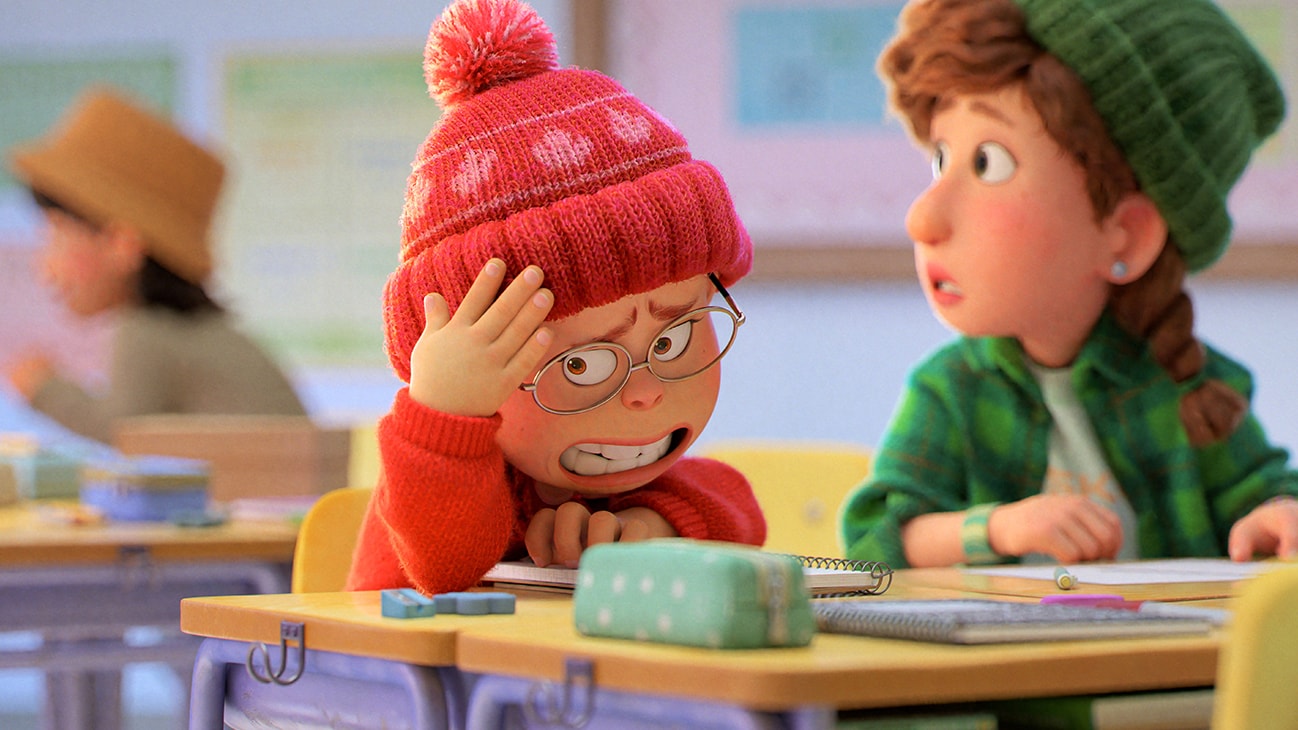
3) Jin Lee in “Turning Red.” The family dynamic isn’t quite as healthy here, and the father is a bit too much of a passive figure.
But he can understand his daughter’s emotions in a way that her mother doesn’t. The scene in which he finds the video of the friends and tells Melin that she can erase the tape if she wants to, but it made him laugh is an emotional highlight of the movie. Jin is able to appreciate and love his daughter’s “messy” side, something many parents struggle with.
And he’s also a 4-Townie. I think having the mental ability to “think young” without painfully trying to act young is a healthy thing. And it’s one reason Jin understand Melin so well.
In this fictional family, Jin also is the cook in the household—the trope in our fiction is often the father who can’t provide food for his family, who feeds them cereal when mom is not around. That’s a reality in some places and times—but I respect more a dad who recognizes the basic domestic skills--such as how to fix a meal, how to run the laundry, how the dishwasher functions--are part of a father’s role. A dad is a parent and should be competent in all parent things—changing a diaper, feeding a baby, washing the dishes and fixing meals in the first place. Yes, the traditional dad is a breadwinner and the traditional mom keeps the home, but the burden of domestic work needs to be shared, and no dad gets a pass for not knowing what most of the buttons on most of the home appliances do. So one reason I really respect Jin is that he know his way around the kitchen, as a good dad ought to know even if he’s not a chef.
 |
| Bandit. No actor listed, because, clearly, Dr. Heeler is a real archeologist. |
4—Bandit in “Bluey.” Yes, I can imagine some of you objecting. “Bluey” is not a realistic show at all—Bandit is an archeologist who never seems to do a day of work. He’s relentlessly optimistic and clueless at the same time. The show does stereotype genders—Bandit Heeler is the carefree, fun parent while the mom, Chilli Heeler, is the sensible voice of reason. While those are stereotypes, that are also true personalities, and, in the improbable world of “Bluey," they ring true for me.
And there is something important and special in the playfulness of Bandit. He’s a character presumably who has a PhD but is quickly willing to imagine with his children at their level. That sense of play is sometime difficult for adults to achieve, but those who can suddenly turn a row of chairs into a bus, plane or train are, in my book, more effective fathers. Play isn’t something to look down on, it’s a lifelong habit that helps us mentally rehearse situations, imagine outcomes, enjoy interactions and create our own fictions.
As Wash says in “Firefly”: “This is a good land and we will call it ‘This Land.’” Not that our own fictions are always all that good nor complex (and there is the tragedy that the character Wash wasn’t a dad), but I think imagination, as long as it’s not narcistic or self-delusional, is a sign of a flexible mind that can stay mentally young.
So, Bandit is no more real than Wiley Coyote. Yet he does have something to say to us dads. Try never to ignore the fantasy lives of your children, and be the dragon or prince or ogre or pirate or captain that the situation demands. At heart, we are all a bit like Peter Pan. And the best dads are adults who can think like adults, but who also retain that portion of their minds that will never grow up.
Bandit comes last, because, in some ways, he’s the best. And his message is simple, but very important. While a parent—a dad—needs to think and act like an adult, they also still need the capacity to think imaginatively and creatively, as a child thinks.
Play with your daughters. And your sons. Never grow up so much that you’re too grown up for that.